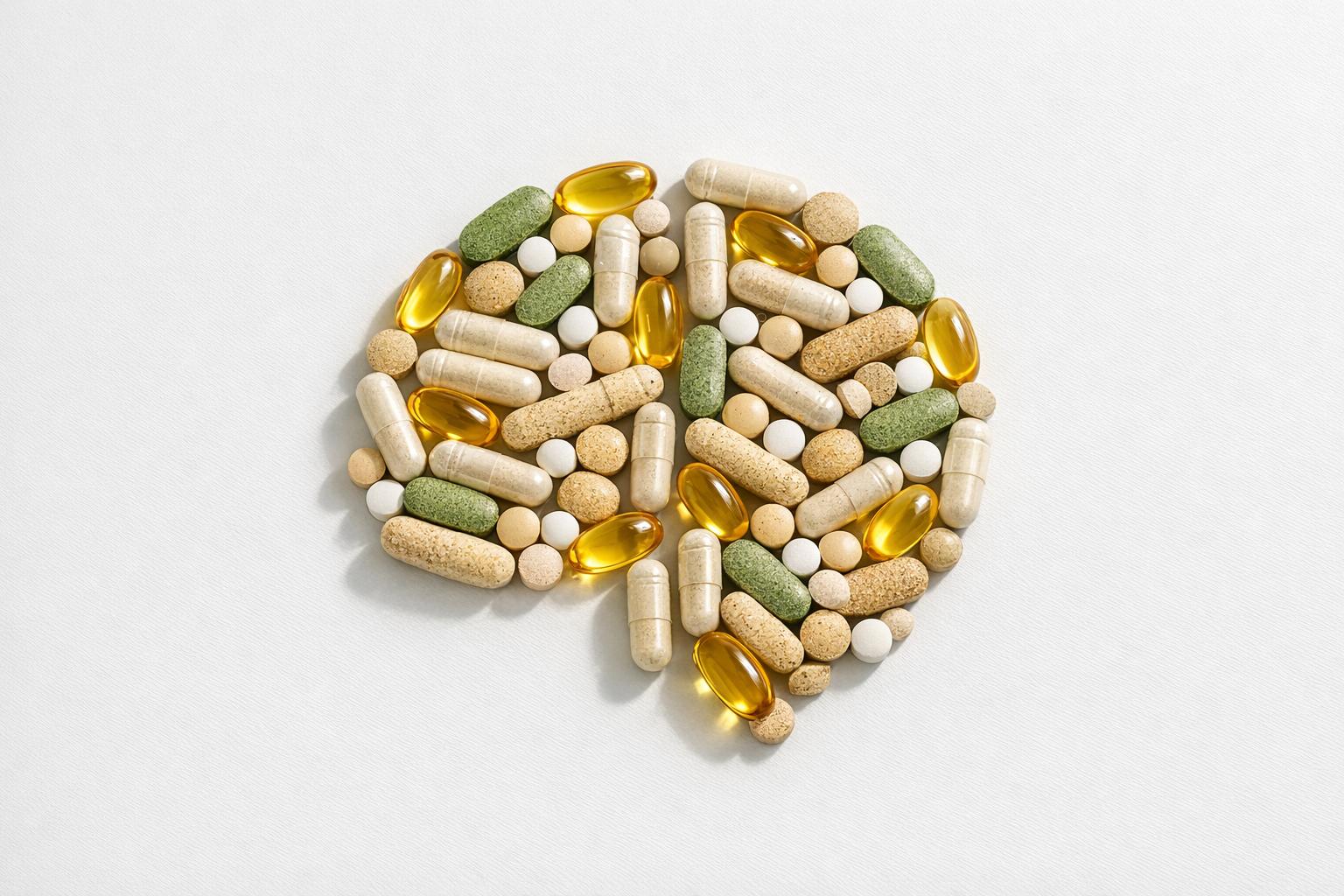
Nootropics, or "smart drugs", are substances that may help support brain function, particularly in older adults. These can be natural compounds like Ginkgo biloba or synthetic options like Piracetam. Research shows mixed results, but consistent use of certain nootropics may improve memory, focus, and overall cognitive health.
Key Takeaways:
- Natural Nootropics: Include plant-based options like Ginkgo biloba, Bacopa monnieri, and Panax ginseng. Studies suggest they may improve memory and attention but require regular use over weeks to show effects.
- Synthetic Nootropics: Examples include Piracetam and Citicoline, which target specific brain mechanisms. Citicoline shows promise for memory and brain protection, while Piracetam's results are inconsistent.
- How They Work: Nootropics may boost blood flow, protect neurons, and enhance energy metabolism in the brain.
- Safety: Natural options are generally safer with lower toxicity risks, but some, like Ginkgo biloba, may interact with medications. Synthetic nootropics often need careful monitoring.
Nootropics are not a cure-all but may complement healthy lifestyle habits like a balanced diet, exercise, and stress management to support cognitive health as we age.
Which Brain Supplements Actually Work? (5 to Use, 3 to Avoid)
Natural Nootropics: What the Research Shows
Natural nootropics have been studied for their potential to support cognitive function in ageing brains. While some research highlights promising outcomes, other studies show limited or no impact.
Ginkgo Biloba: Effects on Memory and Attention
Ginkgo biloba has been one of the most thoroughly studied natural nootropics, yet its research results remain mixed. Known for improving cerebral blood flow and protecting mitochondria through its antioxidant properties, this extract also boosts dopamine and acetylcholine levels in the prefrontal cortex [6][8].
Several studies have explored its effects. For instance, the Paquid cohort study followed 3,612 participants aged 65 and older for 20 years. Among them, 589 individuals using the standardised Ginkgo extract EGb 761 experienced a notably slower decline in Mini-Mental State Examination (MMSE) scores compared to 2,874 control participants. By the study’s conclusion, the Ginkgo group’s predicted MMSE scores stayed above the normal threshold of 24, while the control group experienced a decline of approximately 5 points [7].
"Cognitive decline in a non-demented elderly population was lower in subjects who reported using EGb761® than in those who did not." – H. Amieva, PhD, University of Bordeaux [7]
However, not all findings agree. The Ginkgo Evaluation of Memory (GEM) study, a randomised controlled trial involving 3,069 participants aged 72 to 96, found no significant differences in memory or attention decline between those taking 120 mg of Ginkgo extract twice daily and a placebo group over a median of 6.1 years [9].
A smaller trial conducted by Technische Universität Dresden involved 61 elderly participants with subjective memory complaints. Those who took 240 mg of EGb 761 daily for 56 days showed a significant improvement in cognitive flexibility - the ability to switch between tasks - compared to the placebo group (p = 0.018) [8].
Additionally, a 2025 network meta-analysis evaluating 19 natural treatments concluded that a combination of Cistanche tubulosa and Ginkgo biloba was the most effective for improving memory, executive function, and cognitive flexibility in healthy adults. The combination achieved SUCRA scores of 89.3% for memory and 98.0% for cognitive flexibility [3].
Other natural extracts, such as Bacopa monnieri and Panax ginseng, have also shown encouraging results for memory and focus.
Bacopa Monnieri and Panax Ginseng: Memory and Focus
Studies on Bacopa monnieri and Panax ginseng suggest consistent, though modest, improvements in memory and focus. Reviews have found that Bacopa monnieri enhances memory recall in both healthy older adults and those experiencing age-related memory decline [10][11][12].
Two randomised, double-blind trials provide further evidence. One trial in Lismore, Australia, involved 98 participants over 55, while another in Portland, Oregon, included 54 participants aged 65 and older. Both groups received 300 mg of standardised Bacopa extract daily for 12 weeks. Results showed significant improvements in memory acquisition, delayed word recall, and focus, as measured by the Stroop Task [12].
"Bacopa significantly improved memory acquisition and retention in healthy older Australians." – Annette Morgan, Researcher [12]
Panax ginseng appears particularly beneficial for visual memory. In a six-month study with Korean participants diagnosed with Mild Cognitive Impairment (MCI), a daily dose of 3 g of Panax ginseng powder significantly improved visual memory scores from baseline [2]. These effects are thought to stem from ginsenosides, which reduce oxidative stress and enhance synaptic function.
Both Bacopa monnieri and Panax ginseng require consistent use over at least 12 weeks to deliver noticeable cognitive benefits [12]. A 2025 meta-analysis involving 4,974 participants further supported the efficacy of natural extracts, reporting significant improvements in ADAS-Cog scores, with a pooled standardised mean difference of -2.88 [2].
Acetyl-L-Carnitine and Phosphatidylserine: Brain Protection
Beyond plant-based extracts, compounds like Acetyl-L-Carnitine and Phosphatidylserine play a role in maintaining brain health. These compounds provide neuroprotection, reduce oxidative stress, and help regulate neurotransmitters.
While natural nootropics may offer modest cognitive support, particularly for older adults, consistent use over time seems essential. However, supplements like Ginkgo biloba carry potential risks, such as increased bleeding when combined with anticoagulants. Older individuals should consult healthcare professionals before starting any supplementation [2].
Synthetic Nootropics: Research on Cognitive Decline
Synthetic nootropics are designed to tackle cognitive decline, but clinical trials paint a mixed picture of their effectiveness. These compounds often target specific brain mechanisms, yet their impact on ageing brains remains inconsistent.
Racetams: Effects on Cognitive Decline
Piracetam, a well-known racetam, is believed to improve synaptic plasticity and boost neurotransmitter levels. However, meta-analyses suggest its benefits are limited. While some report an overall improvement (odds ratio 3.43), studies show no meaningful gains in specific areas like immediate memory or MMSE scores[13]. For example, an analysis of 18 studies involving 886 participants found that Piracetam’s memory-enhancing effects (SMD 0.75) fell short of statistical significance (p = 0.12)[14][18].
"Overall the evidence is not consistent or positive enough to support its use for dementia or cognitive impairment." – Cochrane Database of Systematic Reviews[13]
Oxiracetam, another racetam, has shown more promise. Phase IV clinical trials indicate that it can improve cognitive abilities and slow decline in patients with post-stroke cognitive impairment. Its mechanisms include promoting brain phospholipid biosynthesis, activating cholinergic nerve fibres, and stabilising brain energy balance during ischaemia[19].
Piracetam’s blood-thinning effects, similar to aspirin, highlight the need for caution, especially for those on anticoagulants. Effective doses typically range between 1,200 mg and 4,800 mg daily[20]. By comparison, Citicoline offers more consistent neuroprotective benefits.
Citicoline: Neuroprotection and Brain Function
Unlike racetams, Citicoline has a stronger track record for supporting brain health. It addresses age-related memory decline and vascular cognitive issues by promoting neuronal membrane biosynthesis, increasing SIRT1 expression, and modulating key neurotransmitters[17].
A randomised, double-blind trial conducted between 2020 and 2021 explored the effects of 500 mg daily of Cognizin® (a form of Citicoline) in 100 healthy adults aged 50 to 85 with age-associated memory impairment. Over 12 weeks, the treatment group showed significant improvements in episodic memory, with a mean change of 0.15 compared to 0.06 in the placebo group (P = 0.0025). Composite memory scores also improved more in the treatment group (3.78 versus 0.72)[15][16].
"Dietary supplementation of citicoline for 12 wk improved overall memory performance, especially episodic memory, in healthy older males and females with AAMI." – Eri Nakazaki et al., The Journal of Nutrition[16]
Further evidence comes from the IDEALE study in Italy. Among 265 patients with vascular mild cognitive impairment, those taking 1 g of oral Citicoline daily for nine months had significantly higher MMSE scores compared to the 84 patients in the control group who received no treatment[17]. Additionally, safety data from the Cognizin trial showed excellent tolerability, with a 99% completion rate[15].
For healthy older adults dealing with normal, age-related memory decline, Citicoline appears to offer real neuroprotective benefits with minimal risk.
sbb-itb-a752bf8
Natural vs Synthetic Nootropics: Safety and Effectiveness
How Natural and Synthetic Nootropics Differ
When comparing natural and synthetic nootropics, the primary distinction lies in how they're composed and how they work. Natural nootropics, like Ginkgo biloba, are made up of several bioactive compounds that interact in complex ways. For instance, Ginkgo biloba contains flavonoids and terpenoids, which work together to produce its effects [22]. On the other hand, synthetic nootropics are highly refined chemicals designed to target specific neurotransmitter receptors or ion channels with precision [22] [5].
One key difference is dosage and risk. Synthetic nootropics are potent even in small amounts, which can increase the risk of overdose. Natural nootropics, however, often require higher doses and longer periods - around six weeks - to show noticeable effects [2] [22]. Additionally, natural nootropics are widely available as over-the-counter supplements, while synthetic options typically require a prescription [22].
"Natural nootropics also usually have lower toxicity, which reduces the possibility of harm from an overdose." – Matěj Malík, Department of Agroenvironmental Chemistry and Plant Nutrition [22]
The purposes for which these nootropics are used also vary. Synthetic options like Piracetam or Nicergoline are often prescribed for acute conditions, such as recovering from strokes or brain injuries. In contrast, natural nootropics are more commonly used for long-term management of age-related cognitive decline or mild cognitive impairments [22] [5].
These differences shape how these two types of nootropics are evaluated in terms of safety, effectiveness, and suitability for long-term use.
Comparison: Effectiveness, Safety, and Long-Term Use
Given their different compositions, natural and synthetic nootropics have distinct profiles when it comes to safety, side effects, and effectiveness. Natural nootropics generally have a lower toxicity risk and milder side effects. For example, a 12-week study on Bacopa monnieri reported side effects such as dry mouth (23%), palpitations (18%), and nausea (18%) [21]. Synthetic nootropics, while effective, can bring side effects like insomnia, irritability, and headaches [22]. However, even natural options aren't completely risk-free. For instance, Ginkgo biloba might increase bleeding risks when combined with anticoagulants or interfere with blood sugar levels in diabetic patients [2].
| Feature | Natural Nootropics | Synthetic Nootropics |
|---|---|---|
| Composition | Multiple bioactive compounds [22] | Single, purified chemical [22] |
| Typical Dosage | Higher doses required [22] | Active at lower doses [22] |
| Common Side Effects | Mild gastrointestinal upset, dry mouth, muscle fatigue [21] | Insomnia, irritability, headache, rashes [22] |
| Toxicity Risk | Lower toxicity; safer overdose profile [22] | Higher risk of toxicity if overused [22] |
| Availability | Mostly available over-the-counter [22] | Often require a prescription [22] |
| Time to Effect | Approximately 6 weeks for stable changes [2] [22] | Can act faster in acute conditions [22] |
Effectiveness also depends on the specific condition being addressed. A meta-analysis involving nearly 5,000 participants found that long-term supplementation with natural nootropics significantly improved cognitive performance in individuals with mild cognitive impairment or Alzheimer's disease [2]. For healthy older adults, a combination of Ginkgo biloba and Cistanche was identified as particularly effective for improving memory and cognitive flexibility [3]. On the synthetic side, Citicoline stands out for its neuroprotective benefits and high tolerability, with clinical trials showing a 99% completion rate [15].
"Nootropics tend to be well tolerated in patients with cognitive impairments; the incidence of side effects is low, and those that do occur are usually mild." – Matěj Malík, Department of Agroenvironmental Chemistry and Plant Nutrition [22]
For those considering long-term use, natural nootropics are often a safer bet due to their lower toxicity, though they require consistent use to see results. Synthetic nootropics, while more targeted in their action, need careful monitoring. For example, dosages of Piracetam may need adjustment based on kidney function [22]. Among older adults looking to maintain brain health, natural nootropics are generally viewed as a safer and more sustainable option. Ultimately, choosing between these two types requires balancing the need for quick results with the importance of long-term safety.
Conclusion: Supporting Cognitive Health with Nootropics
Main Findings from the Research
Studies suggest that nootropics can play a role in supporting brain health, particularly for older adults, when used consistently over time [2]. A 2025 meta-analysis of 35 randomised controlled trials, involving 4,974 participants, highlighted that taking natural compounds for six weeks or longer significantly improved cognitive scores in individuals with Mild Cognitive Impairment and Alzheimer's Disease. The pooled standardised mean difference on the ADAS-Cog scale was -2.88 [2]. For healthy adults, combinations like Cistanche tubulosa and Ginkgo biloba showed promising results, improving memory, executive function, and cognitive flexibility with SUCRA values of 89.3%, 96.9%, and 98.0%, respectively [3].
Synthetic nootropics, such as Citicoline and Piracetam, have also demonstrated benefits, including improved glucose metabolism and protection against neurotoxicity [1]. Polyphenol supplementation, on the other hand, has been linked to enhanced verbal memory (SMD: 0.33) and executive function (SMD: 0.38), while also reducing interleukin-6 levels, a marker associated with cognitive decline [23]. These effects generally appear after 6–12 weeks of regular use [2]. Together, these findings highlight the potential of nootropics when combined with broader lifestyle strategies.
Lifestyle Factors for Brain Health
Pairing nootropic use with healthy lifestyle habits can amplify their benefits for cognitive function. Diet, in particular, plays a key role in reducing inflammation and supporting vascular and metabolic health [24]. Since nootropics improve cerebral blood flow and provide metabolic support, diets that promote vascular health - like the Mediterranean diet - can further enhance these effects. Additionally, the gut-brain axis, influenced by dietary patterns, plays a crucial role in cognitive outcomes [4].
"Diet is a modifiable lifestyle factor that may have an important role in cognitive health maintenance through pathways involving neurodegeneration, vascular health, energy metabolism, inflammation, epigenetics and other biological mechanisms." – Nature Reviews Neurology [24]
Combining healthy diets, such as the Mediterranean or MIND diets, with regular physical activity can maximise oxygen and glucose delivery to neurons while reducing brain atrophy [24]. Stress management is equally important, as lowering cortisol levels reduces neurotoxicity, while nootropics help protect brain tissue from oxidative stress [24].
It’s worth noting that some natural nootropics may interact with medications. For example, Ginkgo biloba can increase bleeding risks when combined with anticoagulants or affect blood glucose levels in diabetic patients [2]. With dementia cases projected to rise to 152.8 million globally by 2050 [3], integrating nootropics with healthy lifestyle habits offers a proactive approach to preserving cognitive health as we age.
FAQs
Are natural nootropics a safer choice for older adults than synthetic ones?
Natural nootropics are often seen as a gentler option for older adults compared to their synthetic counterparts. These brain-boosting substances are typically sourced from plants, herbs, and other natural ingredients with a history of traditional use. When used correctly, they are generally associated with fewer side effects.
That said, not all natural nootropics work the same way, and some might interact with prescribed medications. On the other hand, synthetic nootropics can be stronger but often come with a higher risk of adverse effects, especially if not taken as directed. For older adults, it’s crucial to consult a healthcare professional before introducing any nootropic - natural or synthetic - to ensure it’s safe and suitable for their needs.
How quickly can nootropics improve cognitive function?
The impact of nootropics on brain function often begins to show within 30 minutes to 2 hours after taking them. However, this timing can vary based on the specific compound, your metabolism, and how sensitive you are to the ingredients. While some nootropics deliver quick results - like sharper focus or clearer thinking - others need to be taken regularly over weeks to help maintain long-term cognitive health.
When addressing age-related cognitive decline, it’s crucial to opt for nootropics supported by solid research. Combining these with a balanced, healthy lifestyle can maximise their effectiveness.
Can nootropics affect how medications work in older adults?
Nootropics, whether derived from natural sources or synthetically produced, can interact with medications frequently prescribed to older adults. Some of these substances may influence brain metabolism, neurotransmitter function, or even blood flow, which could alter how certain drugs work or increase the likelihood of side effects. For example, herbal nootropics like Ginkgo biloba might impact blood pressure or clotting, potentially interfering with medications such as anticoagulants or antihypertensives.
Moreover, nootropics targeting neurotransmitter systems - like those affecting cholinergic or GABAergic pathways - might interact with drugs such as antidepressants or anti-epileptics. These interactions could result in diminished drug effectiveness or side effects like dizziness or excessive sedation. It’s crucial for older adults to consult their healthcare provider before adding nootropics to their routine, ensuring any potential risks are addressed while supporting cognitive well-being.